Sarah Stilton, Review:
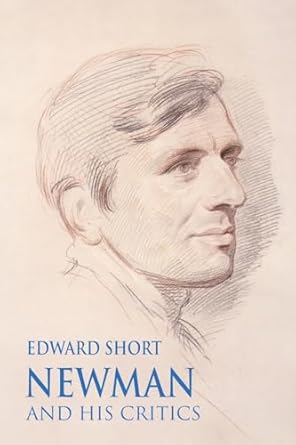
Newman and His Critics by Edward Short (Gracewing, $70 pb, 592 pages)
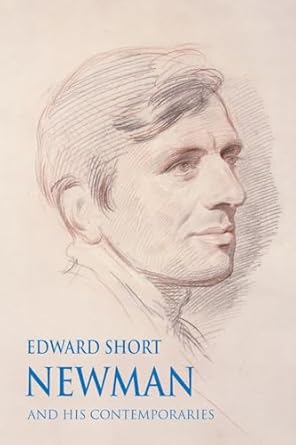
Newman and his Contemporaries by Edward Short (Gracewing, $60 pb, 491 pages)
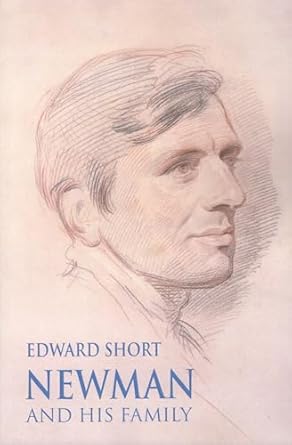
Newman and his Family by Edward Short (Gracewing, $60 pb, 427 pages)
 Early in his career as a columnist, George F. Will said that his views could be known to anyone familiar with the Oxford Movement. I doubt many are familiar with the Oxford Movement today, or when Will wrote those words some five decades ago. While obviously much larger than one person, the Oxford Movement is best-known, to the extent it is known at all today, as something vaguely associated with John Henry Newman.
Edward Short is the author of a four-book series on John Henry Newman, who was declared last month a Doctor of the Church. Newman is probably the most famous Anglican convert to Catholicism and one of the leading English thinkers of the 19th century, and Gracewing has published three volumes of Short’s tetralogy Newman and His Critics, Newman and His Contemporaries, and Newman and His Family (leaving out Newman and History) just in time for the momentous occasion.
These books are a pleasant surprise in that they are not merely intellectual biographies. Instead, Short has accomplished something much rarer and intriguing. Short engages Newman through those he interacted with, both before and after his 1845 conversion. This is possible because Newman left a large corpus of essays, book reviews, sermons, books, and, especially, letters. The collected Letters and Diaries (1961–2008) consists of 32 volumes, and Short makes magnificent
use of this treasure trove of Newman’s thought. Of most significance are Newman’s letters to leading figures of 19th century English intellectual life, including his fellow Oxford Movement collaborators R.W. Church and Edward Bouverie Pusey, the novelist William Thackery, essayist Matthew Arnold, and politicians Lord Acton and William Ewart Gladstone, among many others including friends and family.
The topics covered by Newman were vast: literature, art, history, philosophy, contemporary affairs, and, of course, religion. Short focuses on his subject (Newman) while providing proper attention to the controversies in his correspondence and Newman’s relationships with each of his correspondents, with Newman usually remaining affectionate even with those with whom he strenuously disagreed. Newman was intellectually rigorous which could lead to ruthless public and private criticism (Short says that Newman “never minced words”), but there was a remarkable absence of bitterness afterwards, suggesting that friends and allies, opponents and enemies, can engage in debate without it becoming personally scarring. It is a nice example for those who are disputatious today.
Short says that the lack of enmity despite deep disagreement can surely be chalked up to the value that Newman placed on personal friendships, which are evident in his letters. Reading Newman’s own writing can have the effect of placing him on a distant intellectual pedestal, but Short makes him human. That is especially true in Short’s Newman and His Family. In a letter to his aunt, Newman wrote, “Whatever good there is in me, I owe, under grace, to the time I spent in that house, and to you and my dear Grandmother, its inhabitants.” Yet even writing to his family, Newman discussed politics and religion, and in these more personal letters Newman’s faith comes to life. Whether it is in correspondence with friends or family, we see Newman’s motto as cardinal, cor ad cor loquitur, “heart speaks to heart,” in action.
In Newman and His Critics, Short focuses on the works of Newman’s critics, including of those who lived after Newman such as Short’s contemporary Ian Ker, but more importantly on Newman’s responses to criticism. In this volume, Short presents the intellectual arguments for and against Newman’s views, most notably his disagreements with Arnold, Thackery, Richard Holt Hutton, and Arthur Hugh Clough on skepticism and liberalism, of which Newman was a critic responding to advocates of unbelief and rootless liberty.
Of course, there is a fair amount of correspondence between Newman and others about the Tractarianism of the Oxford Movement, of which he was the most famous postulator.
Tractarianism maintains that Anglicanism, Roman Catholicism, and Eastern Orthodoxy form three branches of the pre-schism Catholic Church. To say this was contentious is an understatement, and several Tractarians, including Newman, who would rise to the level of Cardinal, crossed the Tiber to Roman Catholicism. There is no need to litigate those arguments here, but for those interested they appear in all three volumes.
Edward Short is one of the great Newman scholars; Gracewing has done intellectual history and Newman fans a great service in publishing these three books anew.
Sarah Stilton lives in London. She studied the classics at Oxford and Harvard.