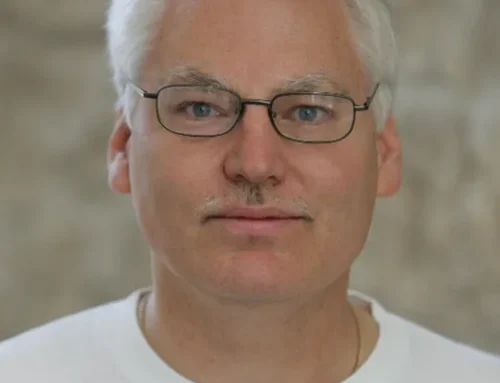
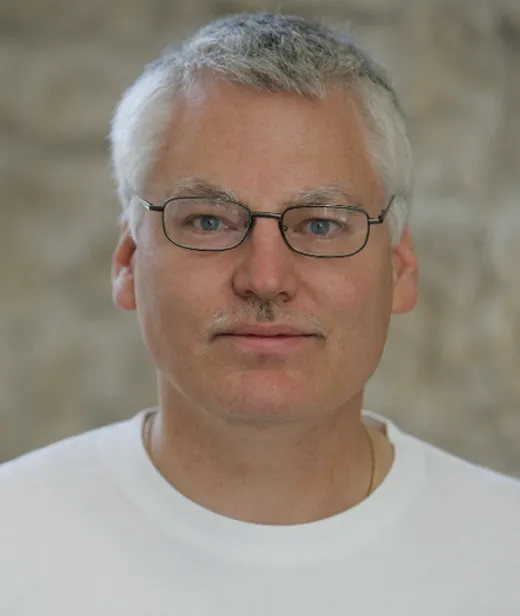
John Carpay:
If ethnic guilt can be transmitted from generation to generation, Canada would face never-ending conflict and strife, to the exclusion of unity and friendship. While the application of the principle “Equal rights for all, special privileges for none” will not by itself create a perfect society, following this principle will create more trust, more justice and more social cohesion than basing laws on ethnicity or descent. Canada should reject laws and policies that are based on race or ancestry.
A friend of mine has 1/32 Aboriginal ancestry, or perhaps 1/64 or 1/128. On the basis of his ancestry, my friend’s son received a special $5,000 grant when attending university; my son did not. I’m truly happy for my friend and his son. But it’s not fair. Based on his ethnicity, my friend also has better legal access to hunting and fishing opportunities than I do. I’m really happy for him. And it’s not fair.
Another friend of mine is German-Canadian. He was born in Germany, came to Canada at the age of five, and speaks German fluently. I was born in the Netherlands, came to Canada at the age of seven, and speak Dutch fluently.
He and I are friends, but our grandparents were not.
My own grandfather fought against the Nazi invasion of the Netherlands in May 1940, and spent years in a prisoner-of-war camp in Germany. He returned home in 1945 with severe and permanent psychological damage. My grandparents, along with the entire Dutch population, suffered through five years of brutal German occupation. This included the Hunger Winter of 1944-45, when tens of thousands of people in the Netherlands starved to death.
Does my German-Canadian friend owe me something in 2025, based on the conduct of his grandparents? I say no.
Race-based laws and policies predictably and inevitably produce inter-ethnic animosity and resentment. When laws are based on ethnicity, people develop an unhealthy obsession with their skin colour, blood lines, and ancestry. While Canada’s race-based laws and privileges may well be based on good intentions, good intentions do not stop the harm that is necessarily done to social cohesion and harmony amongst Canadians.
Today in Canada, legislators, law enforcement, university admissions and awards departments, the civil service, and school boards carve Canadians into ethnic categories in the name of “social justice.”
Canadians who disagree with current policies are silenced and censored. For example, on April 9, Ontario mother Catherine Kronas politely described land acknowledgements as political, controversial, divisive, and inappropriate. She caused no drama or disruption at the meeting of her school’s parent council, of which she is an elected member. On May 22, the Hamilton-Wentworth District School Board informed Kronas that she was banned from attending any further meetings of the Ancaster Secondary School Council.
Land acknowledgements are hypocritical virtue-signaling. I have yet to hear of a non-Aboriginal Canadian transferring the title of his or her home to an Aboriginal for free, as part of a serious effort to return “stolen” land.
Land acknowledgements often include inaccurate claims about “unceded” territory. Numerous treaties formalized the sovereignty of the British Crown over the lands that are today Canada, and over all of the people living on them. The British and French introduced their agriculture, industry, technology, roads, bridges, laws, courts, police, armies, politics, religion, language, and culture. Before and during the arrival of the British and French in North America, Aboriginals fought, killed, tortured and enslaved each other, as other peoples living on other continents have done throughout human history. Aboriginals have the same human nature as other people. Their past need not be romanticized.
Land acknowledgements suggest that Canadians of (for example) Japanese, Pakistani, Portuguese, Scottish, or Kenyan ancestry should feel guilty about living in Canada today. While promoting unfounded guilt, land acknowledgements do nothing to help Aboriginals on reserves deal with unemployment, alcoholism, family violence, high suicide rates, and corrupt local government.
Land acknowledgements are political and controversial, which is why they should not be imposed on people at public meetings.
The first battle which Kronas needs to win is for her freedom of expression, as a citizen and as an elected member of her school parents’ council. While that battle takes place (and unfortunately it may drag on for years), other Canadians are free to object when land acknowledgements are imposed on public meetings. We need to speak up.
John Carpay is president of the Justice Centre for Constitutional Freedoms (jccf.ca), which has provided lawyers to Catherine Kronas in her legal dispute with the Hamilton-Wentworth District School Board.