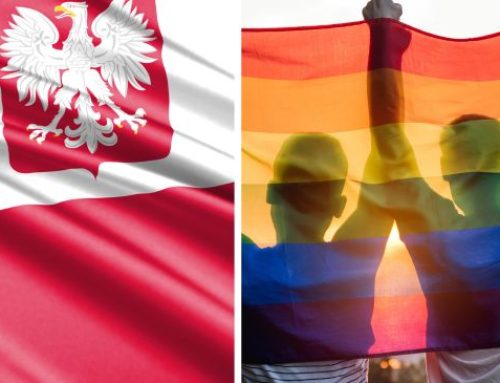
The latest provincial court ruling to redefine marriage was delivered by a Saskatchewan judge in late October. The ruling was easy to justify, because the federal government lawyer responsible for upholding the law refused to defend the definition of marriage in court. Saskatchewan became the sixth province to stand the institution of marriage on its head.
Even so, the rulings can be nullified by the passage of a simple bill by Parliament, and attempts to have that done have heated up the fall session of the House of Commons, as two MPs introduced bills on the subject.
Alberta Conservative MP David Chatters introduced a private member’s bill, C-213, which defines marriage as between one man and one woman, in mid-October. Days later, New Brunswick Conservative MP Rob Moore followed up with a similarly worded Bill, C-268.
While the Chatters bill had been drawn, but is way down the list for discussion, Moore’s was scheduled for debate on Nov. 19. However, it was even that debate was delayed. Also, the standing committee on procedure and house affairs ruled that C-268 was non-votable.
The Commons private members business committee killed two similar bills last year, calling them “unconstitutional,” though those bills contained oblique references to the notwithstanding clause.
Pro-family groups were upset with the heavy-handedness of the committee in not allowing the people, through their representatives, to vote on the issue. One lobbyist told The Interim that “this is another example of the government being afraid to address the issue.”
He added: “Where is the new openness Paul Martin promised as a candidate for the leadership of the Liberal party, to allow MPs their say on the issue and to do things differently from his predecessor?”
Even before the committee ruled the bill non-votable, the Canada Family Action Coalition’s Brian Rushfeldt told The Interim, “If this bill, and others like it, aren’t allowed to come up for a vote, then out last resort is to kill the Liberal government bill on the matter, which will be introduced next spring.”
Explaining why he brought C-268 forward, Moore said, “Parliament, not the Supreme Court, should be making this decision … As Chief Justice McLachlin said in 2001, ‘There is a very real question whether courts, which lack resources for gathering and collating information and opinion available to the legislatures, are the best institutions to decide complex social policy questions.'”
Rushfeldt agreed, saying, “We need to remember that these so-called judges are not gifted with divine wisdom and do not have the final say on this matter. Canadians need to remember that these unelected judges are nothing more than Liberal-friendly lawyers who been given appointments for their past party fundraising efforts.”
Both bills had been stripped of any reference to the notwithstanding clause. A parliamentary source told The Interim, “That is so that Liberal MPs, who would otherwise vote for the bills, can’t raise objections about so-called Charter rights being dismissed as a result of the legislation passing.”