As 1994 is “The Year of the Family” I have been reading a lot about the subject and I thought it might be a good idea to share my research.
People often ask, “What does a priest know about a family anyhow? He doesn’t have one.” Well, I don’t profess to be an expert, but I was not dropped straight from Heaven. I was born into a family in Dublin, Ireland. I had a mother, father and four sisters. I did learn a lot about the family and the role women play in shaping it and have never ceased to admire, respect and appreciate the incalculable influence that women have on the family and consequently on society.
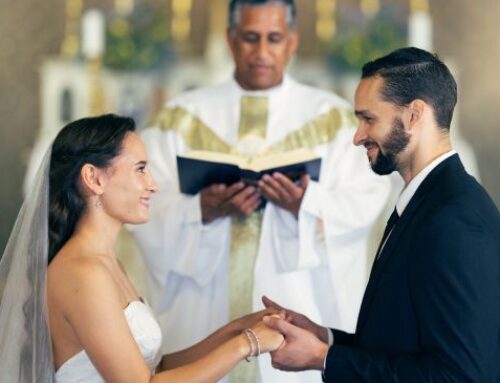
Historically, the family has been seen as an institution, founded by God, with order, pattern and relationship. Marriage is not just a contract, it is a covenant based on love. It is a loving agreement between a man and a woman to live together, to raise a family (if that is God’s will) and to grow in love for each other till death do them part. The family is also a community – a unified body of individuals with children playing a great part in that community. The centre of this community must be Christ.
Vatican II
The 2nd Vatican Council said, “The Creator of all has made the married state the beginning and foundation of human society.” The Church has a great deal to say about the importance of the family, but I thought it might be more constructive to quote from lay experts who study the family from a social rather than religious view.
Dr. Wilder Penfield, former President of the Vanier Institute, feels that the importance of the family cannot be overemphasized: “There never has been and there never will be a durable society based on any other system than the union of man and woman and child. Should the family fail, society and civilization are doomed.”
Dr. Ross Campbell, in his book, How to Really Love your Child, says that parents sometimes think that because of so many outside distractions, they cannot have the final influence on their children’s formation. Dr. Campbell maintains that, despite these distractions, the home remains the centre of greatest overall influence.
Delores Curran’s, Traits of a Healthy Family explores what makes families strong. She sent a questionnaire to 500 “experts” on family living, asking them to mark off 15 traits which they considered most important in a “healthy” family. She discovered that communicating and listening were the number one traits found in healthy families.
Curran devotes a lot of print to the question of TV in the home. While admitting that TV is a wonderful instrument, she excoriates its abuse. She says, “Whether the breakdown of family communication leads people to excessive viewing or whether viewing breaks into family lives so pervasively as to literally steal it from them we don’t know. But we do know that we can be out of reach of each other when we are in front of the TV.” One wife remarked, “I can’t get worried about life after death. In our family I’d settle for life after dinner.”
Separation is rejection
In Where Have All the Mothers Gone, Brenda Hunter observes the importance of mothers raising young children. She notes that “the attachment relationship that a young child forges with its mother forms the foundation stone of his or her personality. The young child’s hunger for its mother’s presence is as great as its hunger for food. When the mother goes back to work during the first year of the baby’s life, the baby comes to view the daily separation as rejection.” And rejection appears to be the major cause of psychological problems in later life.
I cannot conclude without mentioning the importance of family prayer. If parents do not bother to go to church on Sundays they are telling their children that God is not important. Prayer in the home itself is also vital.
The importance of parental example cannot be overstressed. “I’d rather see a sermon than hear one any day. I’d rather you would walk with me than merely show the way. The eye’s a better student and more willing than the ear. High counsel is confusing but example’s always clear. And the best of all the preachers are those who live by their creeds. For, to see the good in action is what everybody needs. I may misunderstand you and the high advice you give. But there was no misunderstanding how you act and how you live.”