Donald DeMarco:
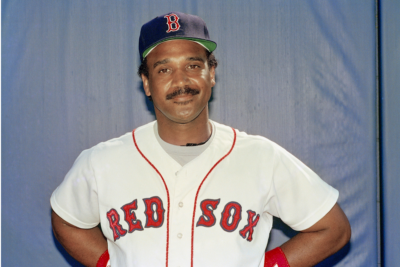 The Fifth Annual Report on It was just another game in the long 162 marathon that is the season of baseball. Or was it? Boston Red Sox first baseman Pat Stapleton came to bat in the fourth inning against the Chicago White Sox with the score tied 2-2. Stapleton hit a line-drive that would have been far less memorable if it were merely a home run. It was a hard-hit foul ball that struck a four-year-old boy in the forehead. The boy was screaming as blood gushed over his left eye. Red Sox left fielder, Jim Rice sized up the situation immediately and dashed from the dugout into the stands, picked up the boy and carried him back to the dugout where the Fenway Park medical crew gave him immediate attention. On examining the boy, Dr. Arthur Pappas realized that surgery was needed to relieve pressure on the boy’s brain.
Jonathan Keane, the casualty, was rushed to Children’s Hospital. After emergency surgery and five days in the hospital, Jonathan went on to make a full recovery, his only blemish being a scar over his left eye. He was convinced that Rice saved his life. This was also the opinion of doctors who attended the boy. Jonathan Keane later went on to graduate from North Carolina State University and became CEO of CustomerHD in Raleigh, N.C. He has no memory of that event that took place on August 7, 1982. He cherished the memory, however, of having the honour, in 1983, of throwing out the first pitch in a Red Sox game.
After rescuing the child, Rice returned to the game sporting a blood-stained uniform. The press interpreted the blood as a badge of courage. Perhaps higher praise could have been bestowed on Rice. He was exhibiting a badge of heroism. He downplayed the heroic aspect of the incident, offering these words to an interviewer: “I see me carrying my own kid. I see me being a parent, being a father, being someone that is able to think about others. If that was my child, I would want somebody to react the same way.” In this statement he made a moral connection between a son and a neighbor. He was, in the spirit of the Good Samaritan, treating his neighbour as if it were his own son. (He and his wife Corinne have two children.) He visited Jonathan in the hospital and when he discovered that the family did not have much money, asked the business office to send the hospital bills to him.
Whether the Red Sox won or lost the game played on that breezy day in August, seems of little interest and has been long forgotten. Four decades later, journalist Trever Hass penned an article carrying the title, “Forty years later, a look back at the day Jim Rice saved a boy’s life at Fenway Park.” As far as Rice was concerned, the day he came to the rescue of a four-year-old boy “stands out,” in his words, far above hitting homeruns and batting in runs. And, one would think, even the day he entered the Hall of Fame in 2009.”
The game of baseball sometimes requires a batter to lay down a bunt. This is called a “sacrifice.” Then, there are sacrifices above and beyond the call of duty. Baseball is a paltry imitation of the game of life.
The term “Good Samaritan” is used as a common metaphor applied to any person who, like in the parable that Jesus tells (Luke 10:25-27), comes to the aid of a stranger who is in need. Jim Rice’s actions back in 1982 surely qualify him for that title.
An expert in law came to Jesus and asked what he must do to inherit eternal life. Jesus responded by stating that he must “Love your neighbour as yourself.” But the scholar needed a clearer understanding of “neighbour.” It was at that point that Jesus unfolded the parable of the Good Samaritan.
The story is familiar: A man was attacked by robbers who beat him and left him half-dead by the roadside. A priest and then a Levite saw him but passed by. Prejudice was a factor in not coming to the man’s aid. Finally, a Samaritan came by and took pity on him. He bandaged his wounds and took him to an inn. He gave two denarii to the innkeeper and promised to reimburse him if there were any additional expenses.
Then Jesus turned to the scholar and asked “which of the three was a neighbour to the man who had fallen into the hands of the robbers.” The scholar replied, “The one who had mercy on him.” Jesus then said, “Go and do likewise.” A denarius, it may be noted, was the usual daily wage of a day laborer.
Each one of us is a neighbour and should act accordingly. We should not wait until another person acts in a neighbourly fashion. We must take charge as Jim Rice did.
No doubt there are many sports celebrities who have behaved in the tradition of the Good Samaritan. I chose James Edward Rice because he demonstrated his neighbourliness in a public arena of 30,000 people and imitated his prototype by paying for Jonathan Keane’s hospital expenses. In Rice’s case, it saved the life of a child who went on to be successful. Good neighbours can save lives.