Jean M. Twenge (Atria, $26 pb, 215 pages)
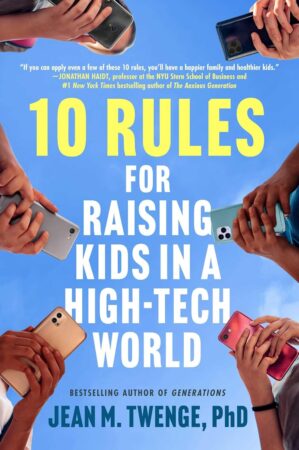 Jean Twenge delivers on the subtitle of her book 10 Rules for Raising Kids in a High-Tech World which is “How Parents Can Stop Smartphones, Social Media, and Gaming from Taking Over Their Children’s Lives.” The ubiquity of smart phones, tablets, laptops, and other devices made it practically inevitable that parents and schools would provide them to children and students. Only recently has social science research illustrated how addictive these devices are and in her other books (iGen and The Anxious Generation), Twenge has explored the social and psychological costs of handing our children over to these technologies. But despite their addictiveness (for both parents and children), we are not powerless against these technologies. We can take back the time and attention these devices have robbed ourselves and our children from us. Twenge’s 10 Rules for Raising Kids in a High-Tech World provides evidence-based advice on how to restore a healthier tech-life balance. As Twenge argues, “every single activity on a screen” is “linked to more unhappiness.” Screen time correlates with rising depression and sinking levels of adequate sleep and in-person socializing. “Devices are taking over … children’s lives” and it is actively harming them.
Twenge argues the best defense is to delay as long as possible, and not before middle school, before giving a phone to a child and that their first phone not be a smartphone; a child’s first smartphone should come no earlier than age 16. She also says families should keep young children off gaming consoles. But with schools becoming increasingly online and digitized, it is harder to set limits (times and places) when children can access their addictive, anti-social, depression-inducing devices. Technological fixes are available that allow parents to limit access to certain types of sites or the amount of time children can be on phones, but clever kids figure out how to circumvent these obstacles. Still, parents must set and enforce limits, including setting the parental controls on devices. Twenge also recommends creating no-tech times within the house, no electronic devices in the bedroom after bedtime, and petitioning schools to introduce phone-free policies. And one piece of advice that parents might be less enthused about is that they must set the example and get off their own phones more frequently.