By Paul Tuns
 I hope you are both informed and entertained by our large feature, “20 ways COVID is changing society.” Without getting into it too much, I want to point out that most, if not all of the changes, in society are the result of the anti-pandemic measures taken by governments around the world in response to the outbreak, rather than the coronavirus itself. Whether or not these measures were necessary or proportionate, we take no position although those at The Interim and its board have our own opinions. The purpose of our cover story is to merely observe – as we approach the one-year mark of public policy measures to combat the pandemic — that there is an impact on society, some of which might be long-lasting, some of which might not. As for the various ways lockdowns are changing society, some of the impacts directly affect the issues we normally cover in this paper, namely those affecting faith, family, and the sanctity and dignity of human life. But others indirectly affect those issues that allow for family formation and healthy communities, necessary preconditions for human flourishing. Some are light-hearted (“The return of the front porch”) while others are obviously much graver.
**
There is a change in the format of our back-of-the-book feature, “And Then There Was This.” This month we have experimented with headlines and datelines, and eliminated the section heads for Canada, United States, and International. Let us know what you think of the change by sending a note to letters@theinterim.com. Your input is always appreciated.
**
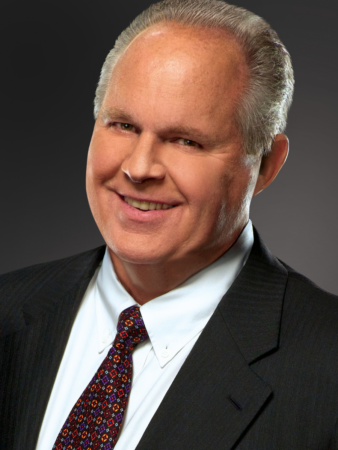 Rush Limbaugh, the most listened to man in America, passed away last month. He was, to put it mildly, a divisive figure. The Left loathed him and he had more than his fare share of detractors on the right. He passed away after a year-long battle with Stage 4 lung cancer that doctors told him would kill him in a few months. He lived a year, and in December offered a Lou Gehrig-like monologue about how he was lucky not only to be alive, but to have the platform and fans he had for the past third of a century. Mark Steyn, a regular guest host for Limbaugh over the years, and especially so over the past year, noted that commercial radio is a century old and Limbaugh has had the largest audience (by far) for a third of that time. As Steyn said, many artists are on the top of the charts for a short or intermittent periods of time, but Limbaugh was consistently the most listened to host in America since the early 1990s. He is credited with revitalizing AM radio, which had been declining in the 1980s and early 1990s. He revolutionized talk radio. He was a big part of my life during my times as a student and afterward, although I stopped listening to him in recent years – he was too caustic for my liking and became more oppositional than constructive (although there is almost always a role for opposition and criticism). But when I listened to him regularly in the early years, he was the epitome of the happy warrior. I loved how he led off shows at the beginning of the Bill Clinton administration with, “America Held Hostage, Day 55” and the next day “America Held Hostage, Day 56.” Limbaugh was correct to say he was successful not merely because he was a conservative voice in a mostly liberal media environment – his famous mantra was “I am balance” – but because he was entertaining. Five million people a day are not tuning into a show to hear opinions they share; they tune in because it is a great way to spend some time. No one came close to dislodging the king of talk radio because no one was nearly as entertaining as Rush.
That is not to say that his conservative political views were not relevant. Limbaugh was unabashedly pro-life. He was a fierce advocate for Terri Schiavo when her husband Michael was trying to kill her over the objections of her family. This was in stark contrast to her own bishop who remained silent throughout the ordeal. When Terri Schiavo died in 2005, Limbaugh called it “the day our country hit rock bottom.” He was strong and clear on abortion, bringing it up often, and sometimes in unexpected ways. Addressing the racial reckoning for America that some activists seek, Limbaugh said, “I don’t know how you can have so much white guilt over slavery 150 years ago and have no guilt over what’s happening with abortion.” In 2013 he said: “I just want to tell you something. I really think that abortion is at the root — you could do a flowchart — I think abortion is at the root of so much that has and is going wrong in this country. I think that the number of abortions themselves, but what in toto it all means, culturally, in terms of the sanctity of life, how that’s crumbled, I think it’s almost at the root of everything. And if it’s not at the root of everything, it’s clearly had a profound impact on our culture, our society, and our politics, I think in ways that people don’t even stop to consider.” He said once the idea of easily avoiding personal responsibility is accepted as a right, it infects everything. “You can trace the problems with accepting personal responsibility, no consequences for your actions, you can trace so much right back to it,” he said of abortion. He also wondered about “society having literally no problem with eliminating 52 million of its citizens.” Another time he said that the media largely ignored abortionist Kermit Gosnell killing babies who survived abortion because it didn’t fit the only narrative the mainstream media cares about when it comes to abortion: “Republicans want to deny women their reproductive freedom!”
The Left sought to censor Limbaugh and, when they were unsuccessful, tried in various ways to counter him, but nothing worked. They didn’t get the important element: be entertaining. Limbaugh’s unmatched talk radio success, Steyn argued, was “the largest obstacle to the complete marginalization of conservative ideas in our culture.” The online reaction to Rush’s death was divisive, with many on the Left downright jubilant over Limbaugh’s passing. Too many of us do that, but it is always wrong. Death comes for us all, but we cannot celebrate a person’s passing. As Proverbs advises, “do not gloat when your enemy falls; when they stumble, do not let your heart rejoice.” Yes, Limbaugh mocked the deaths of AIDS patients in the 1990s (which he later said he regretted and apologized for) and he ridiculed the Parkinson’s tremors of actor Michael J. Fox. But the glee which his detractors had in his passing was precisely what they claimed to hate about the famous radio host: his (alleged) viciousness. CLC president emeritus Jim Hughes always said he prayed for Henry Morgentaler, and usually (but not always) the reaction was positive. We should want our political opponents to die in a state of grace, and because we cannot know if they are, it is wrong to wish death upon others or celebrate when death finally arrives.