Her ex-fiance’s recent troubles bring to mind the infamous 1989 late-term abortion ruling
By David Dooley
The Interim
Several newspaper stories in January and February brought to mind one of the oddest abortion decisions ever to be made in Canada. In January 1989, Chantal Daigle agreed to marry her boyfriend Jean-Guy Tremblay, with whom she had been living; in February she became pregnant. By the following summer, however, he had become abusive and violent, and she no longer wanted to marry him or have the baby he had fathered. She was on her way to Sherbrooke on July 8 when she heard that Tremblay had secured a court injunction to prevent the abortion. Her lawyer took her case to the Québec Court of Appeal, but on July 26, to the shock and dismay of “pro-choice” groups, the Court upheld the injunction in a split decision. It based its ruling on the provincial Charter of Rights, which states that “Every human being has a right to live, and to personal security, inviolability and freedom.”
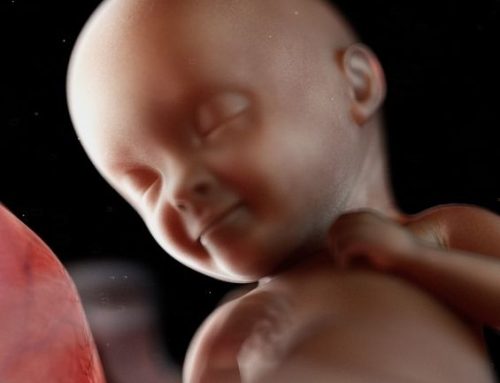
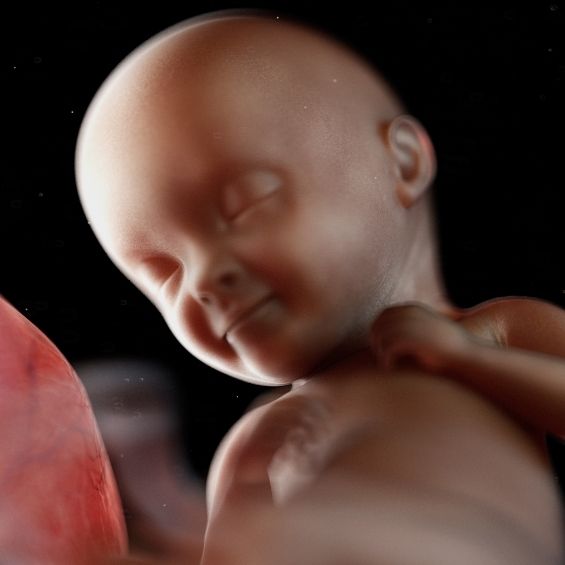
Mr. Justice Yves Bernie, for the majority, wrote that, “The child that has been conceived but has not been born is a reality that must be taken into account. It is not an inanimate object nor the property of anyone, but a living human entity distinct from the mother …. and has the right to life and protection from those who conceived it.” In this case, he said, “…the fetus is normal, the [woman’s] health is excellent and nothing would lead us to believe that the birth would harm her safety. Under the circumstances, the fact that she decided not to live with her partner does not constitute, in my opinion, sufficient motive to end, despite the father’s opposition, a pregnancy as advanced as this.” By this time, Chantal’s baby was well into its second trimester. Judge Louis LeBel, also in the majority, said that the fetus, at 20 weeks, was a viable human being, and an abortion would constitute a violation of its rights under the Québec Charter.
Chantal’s lawyer, Daniel Bédard, filed a hasty appeal to the Supreme Court of Canada (then in recess for the summer), and for only the second time in the Court’s history the Chief Justice, Brian Dickson, called his colleagues from vacation to hear the application for leave to appeal. It was granted, and a hearing was set for August 8. Margaret Somerville, director of the McGill Centre for Medicine, Ethics, and the law, said that there was no way Chantal Daigle would get her abortion: “That baby is viable. The Supreme Court of Canada indicated in the Morgentaler case that a viable fetus would be protected by the law.” But while the Court was in session, Chantal’s lawyer stunned the justices by announcing, with considerable embarrassment, that he had just heard that his client had already had the abortion. Because it was a late abortion, difficult to obtain in Canada, she has gone to Boston for it, presumably for the grisly procedure of having her baby killed, dismembered, and its parts re-assembled to ensure that everything had been removed from her body.
Instead of penalizing her, after a short recess the justices carried on with their hearing, and at its end announced Chantal was allowed to have the abortion she had already had. Despite Margaret Somerville’s prediction, they showed no sensitivity whatsoever to the fate of the unborn baby – then at least 22 weeks old, and perhaps, as Somerville said, viable. Mr. Justice LeBel had written that “It is difficult to deny that the fetus, especially once it reaches this stage of development, becomes part of humankind …” His clear thinking on the subject was in marked contrast to the muddle the Supreme Court got into. As its written decision showed when it appeared some months later, it did not even know what a human being is: “The meaning of the term ‘human being’ is a highly controversial issue … and it cannot be settled by linguistic fiat. A purely linguistic argument suffers from the same flaw as a purely scientific argument: it attempts to settle a legal debate by non-legal means.”
This is mere legalistic gobbledygook; if a being has human chromosomes and human DNA, it is a human being. The court also called Tremblay the baby’s “potential” father, as if there were some further work he had to do before he could become its parent. It also called the infant in the womb “potential,” as though it had not been real enough, in Chantal’s experience.
Chantal Daigle was Chatelaine’s “Newsmaker of the year”; then she and Tremblay disappeared from public scrutiny. On January 27 of this year, however, his picture was in theNational Post, accomplished by an account of his impersonation of a hockey player, a lawyer, a computer programmer, a pilot, and a musician, all to gain the attention of a series of women friends. He had also been guilty of assaulting six women, and the police in Alberta, where he now lives, were seeking to have him declared a dangerous offender. Was Chantal justified in having her abortion then? She deserves sympathy for being linked with a ruffian, but nothing could have justified her aborting a baby then perhaps at the stage of viability. One horror does not excuse another.
Meanwhile Mr. Justice LeBel has been appointed to the Supreme Court of Canada, and aToronto Star columnist has used his ruling in the Daigle case to question his fitness for this eminent position. In fact he may already have felt the corrupting influence of Ottawa. An interview with him reported in the National Post for February 15 revealed that his perspective has changed in the decade since he ordered a woman not to abort her 20-week-old fetus. Harsh abortion laws, he declared, can drive women to risk their lives and health in an effort to end unwanted pregnancies. This tiresome cliché is unworthy of a Supreme Court judge. The Badgely Report on the working of the abortion law (1977) carried statistics on the number of women who died from attempts at abortion before the new law came in in 1969 – about 12 a year. To save 12 women, then, we now kill well over 100, 000 babies – about 9,000 per woman, a shocking disproportion.
If the issue came up in court again, Mr. Justice LeBel said that he would try to keep an open mind: “Whatever I said or wrote on the subject … I would have to take into consideration the legal developments on the problem.”
The real problem is the lack of legal developments where they are needed, specifically the acknowledgment that while fetology has demonstrated the uniqueness of the human being, the law still remains stubbornly in the Dark Ages. Still Mr. Justice LeBel concluded his interview with one hopeful statement of principle: “But at the same time we know that we (judges) must uphold some basic values, and that we must stand for those values if at some point we believe that there has been a sharp violation of those values and rights.” If another abortion case comes up, let us hope Mr. Justice LeBel will remember, and act on, Mr. Justice Bernie’s declaration that “The child that has been conceived but has not been born is a reality that must be taken into account. It is not an inanimate object nor the property of anyone, but a living human entity distinct from the mother…and has the right to life and protection from those who conceived it.”