The ‘slippery slope’ argument proves valid One argument against euthanasia – one worth putting forward as it appears that Francine Lalonde’s private member’s bill is to be re-introduced in Parliament – is that it is wrong. Quite simply, that killing people for any reason other than immediate self-defenxe or in the course of a just war is immoral. There are, alas, a large number of people who don’t share that view, as the existence of abortion illustrates. So, while we might still hold to our principles in order to prevail in the debate, we shall have to change our argument to one where we can at least engage with, perhaps even persuade, our opponents.
The most powerful of these alternatives is the slippery slope one: if we make legal the deliberate killing of the terminally ill who are in great pain, how do we ensure that only the terminally ill in great pain are those who are actually killed? One thing we do have to acknowledge is that killing people already takes place. Food and water are sometimes withdrawn from patients to hasten their deaths and treatments that could prolong life are often not given.
No, this isn’t the same as euthanasia, in the same way that sins of ommission and of commission are different. It is also true that in occasional cases, massive doses of painkillers are administered, the effect of which is to (purposefully or accidently) kill. But again, this is not quite the same given the notion of double effect. Yes, death is the known and foreseen outcome, but the purpose is to smoothen away the pain (for a terminal cancer patient, the line between pain relief and overdose narrows ever further during the progression of the disease, to the point where there is no divide).
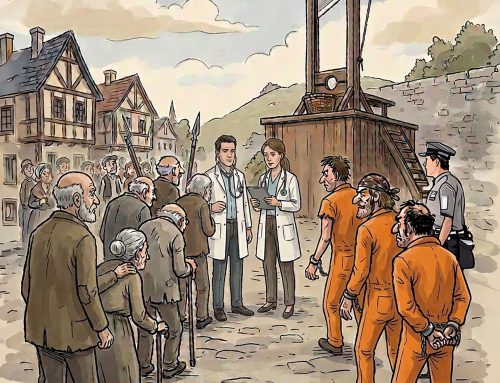
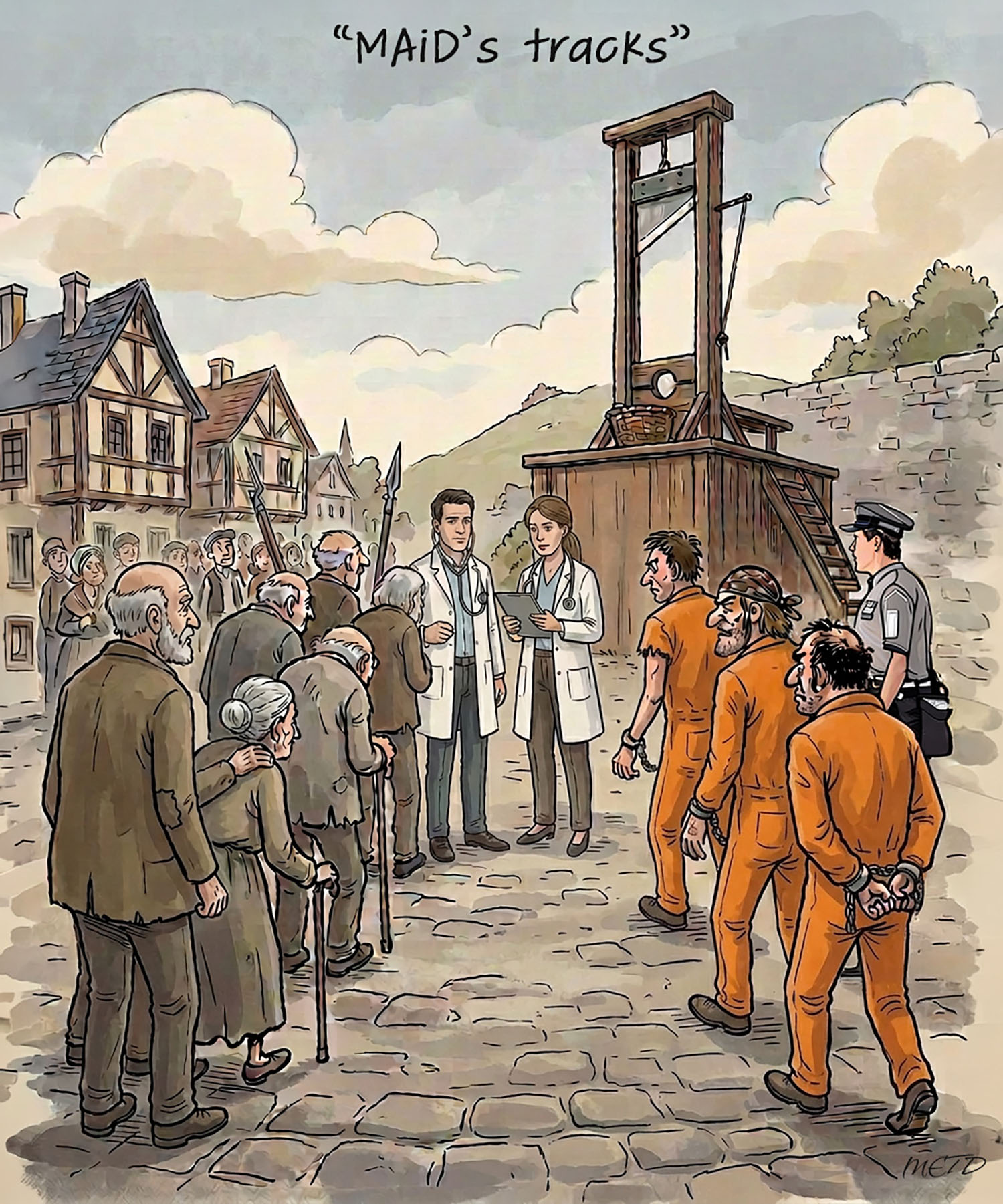
Given these facts about what already happens, how can we then insist that those who wish to hasten their own deaths, to avoid that last sequence of pain and helplessness, may not do so? The answer lies in the slippery slope and the difference between acts of ommission and those commissioned. At the moment, the deliberate infliction of death, for the purpose of actually killing someone, is murder. It’s a line that very few cross. But when we breach that line and allow death to be delivered, then we find ourselves sliding down a very steep slope, indeed. How are we to define those who may ask for, and then have delivered to them, this release? Only those with an already terminal illness? We all have that – it’s called life. Only those likely to die imminently? Only those who ask for it? What about cases of dementia, where the patient is clearly incapable of giving informed consent?
All theoretical, of course. We’ll be told that these are mere details that can be sorted out by a strict drafting of the law. Matters will only go so far and then stop, we’ll be assured. At which point it might be worth looking at what has happened in the one country that does actually have legal euthanasia and has for over a decade: the Netherlands.
The arguments there were the same: that some among us do indeed end up suffering appalling deaths, so it is our duty to aid them to pass peacefully if we can. Once the deliberate taking of life by the medical system was sanctioned, then that helter skelter ride down the slope began. As The Guardian (a left-wing U.K. newspaper generally supportive of euthanasia and abortion) noted in 2004, some 4,000-5,000 people die of euthanasia in Holland each year. That is 3.5 per cent of all deaths in the country. So much for a terribly rare procedure, only to be used in extremis and reserved only for the most terrible of cases. Discussions are now proceeding on extending it to those with dementia (precisely those who cannot consent).
Euthanasia is also exercised on some children, specifically handicapped newborns. Why they don’t simply call it post-partum abortion is beyond me. Remember, this is not the withdrawal of care that has gone on everywhere since time immemorial, but rather the deliberate killing of a baby because someone thought the child has a life not worth living. Taking the first step toward euthanasia leads all too soon to a change of view that allows, nay, makes inevitable, the next step, a theory confirmed by convincing evidence that there are up to 1,000 involuntary cases of euthanasia a year in Holland. Once the medical profession has moved beyond the Hippocratic Oath – first, do no harm – then it becomes ever easier to justify, without the consent or even knowledge of the patient, doing harm in pursuit of loftier objectives, such as minimizing pain.
Quite the worst story I have heard came from a Dutch-speaking relative of a fellow British writer, Natalie Solent. When working in an old people’s home, handing out medicines for various ailments, the residents would often be terrified and say, “No, no, not the pill.” Something of an invidious choice, really, changing the law so that one can be free from a painful death, but then spend your declining years in fear of being killed.
But if you want to see quite how far it might go, listen to the British ethicist Baroness Warnock. She is actually on record as stating that perhaps the old have a duty to die, so as to save their inheritances for their children or to keep them from witnessing their own suffering. She also added that the elderly might have such a duty to die so as to save the National Health System money.
Yes, that is quite how far I think the slope might extend: from having the “right” to request your death to having the duty to do so.
Better to stop at the top, not the bottom.
Tim Worstall is a columnist for TCS Daily and a blogger at the Adam Smith Institute. His writings have also appeared in the London Times and Daily Telegraph.