Just about the most despised word among libertarians today is censorship. They equate it with fascism and other such vile terms. Why, the strong proponent of censorship is regarded as in reincarnation of old man Hitler himself.
Especially are they riled when the subject of censorship is sex. Let a few seconds be deleted from a movie called The Tin Drum, or a book entitled Catcher in the Rye be banned from a school library, and blood vessels start popping – at least figuratively – all over the place. Letters fly off to editors decrying this “suppression of free speech.” Editors themselves warn of the possibility of Nazi-like book burnings. And columnists turn out emotion-laden articles hinting we are already living in a totalitarian state.
Yet isn’t it all so silly” Censorship’s most pronounced enemies invariably place themselves in a trap: they get caught actually supporting censorship when it meets their own political, philosophical or personal needs. Oh, they don’t’ call it censorship. Nothing as blatant as all that. What they do they simply regard as using intelligence or discretion – virtues don’t allow their opposition.
Nevertheless, something somewhere along the line ends up getting banned with their approval.
A good example of this double-thing is the Toronto Star (although instances of it could be found in other publications). Many times over the past few years the Star has carried editorials condemning censorship as it pertains to the arts. Yet this did not stop the paper from banning the comic strip Little Orphan Annie in early 1982. It was removed because it was considered, of all things, to be too violent. Complaints from fans eventually brought it back.
Feminist pressure
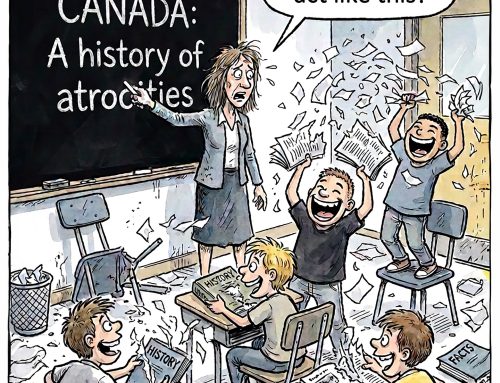
Just over a generation ago the Toronto Board of Education withdrew (rightly) a book called Little Black Sambo from its schools. The book placed black children in a less favourable light than white children and its critics fought hard to have it banned. Likewise, over the past dozen years or so feminists have been pressuring school boards all over the country to get rid of books (in some cases would they have been burned?) which continue to show Mom in her traditional role as homemaker. While libertarians get worked up whenever a sexually explicit book is denied our students, they have been notable for their silence in regard to other schoolbooks being banned. Could it be that their dislike for censorship is only half-hearted and that they actually see some good in censorship after all?
Other forms of expression are stifled by other government bodies. At a Toronto Transit Commission meeting on November 17, 1981, an anti-abortion poster (remember the one with the toy soldier crying) was considered for display in the city’s subway cars. Even though it was an award-winning ad it was turned down as being too controversial. There were a few cries of outrage from censorship’s stated foes. In fact, that paragon of free speech, the Toronto Star, had already editorialized in favour of the ban the previous week. This was opposite to the media reaction to the treatment of that other award-winning affair, the Tin Drum, by Ontario’s censor boards. The film was banned from being shown in its uncut state. Then, libertarians screamed loud and long about what they claimed to be the evils of censorship. Would their acceptance of this “evil” in the case of the abortion ad be because libertarians as a group are generally in favour of abortion, and having the opposition gagged is politically expedient for them?
Free Speech
For the past few years there has been a law banning an employer’s stated choice of help-wanted by sexual gender. Even though an employer might prefer, say a man for a particularly heavy job, any ad submitted to a newspaper showing such a preference would be quickly censored. This suppression of free speech in advertising is also accepted by censorship’s foes with nary a whimper.
Probably the best test of all concerning the acceptance of censorship is the personal one. No matter how loudly a person may denounce censorship, there can be a time in his personal life when he will gladly embrace it. Suppose certain information were leaked t the media which could greatly embarrass him or members of his family if it were published, or even worse, threaten their lives It is safe to say that our staunch defender of free speech would want this particular information suppressed, or in other words censored. And who could blame him?
So, it would appear that it is not censorship itself that is important. What really matters is the material being censored and who is objecting to or approving of same. Censorship can be good or bad depending on where you stand. Anyway, the next time someone sounds off about the evils of censorship, remind him or her of all the forms of censorship he or she already accepts.
Editor Notes:
With regard to the Toronto Star’s attitude toward censorship mentioned in the fourth paragraph, the dates of three editorials in favour of doing away with censorship are as follows: October 17, 1979, January 13, 1982, and March 26, 1983.
The information pertaining to Little Orphan Annie, contained in the same paragraph, was gleaned from an article by Ray Gardner, the Star’s ombudsman which appeared on February 20, 1982.
The editorial referred to in the sixth paragraph appeared in the Toronto Star on November 8, 1981.