Talking Classics: The Shock of Old
Mary Beard (University of Chicago Press, $29.95, 198 pages)
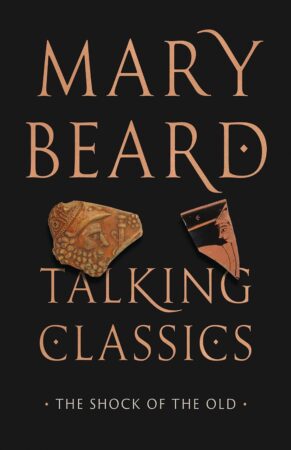 Mary Beard, professor emerita of classics at Cambridge, has written nearly 20 books on the ancient world, mostly Roman, so it is surprising that she admits in Talking Classics, that she does not study the classics – the study of the Latin and ancient Greek languages, and the literature, histories, and philosophy of Rome and Greece, but also the social history of the times — because “I love them” but “because they are sometimes a pleasure, often destabilising, regularly surprising, but most of all unfailingly eye-opening.” Drawing on a series of lectures, Beard uses colloquial language to make the remote intelligible, to encourage moderns to engage the ancients as horizon-expanding experiences and thoughts. It is important to note that such engagement is not limited to reading the classics but viewing sculpture and architecture and thus Beard shares anecdotes about graffiti and toilets. Indeed, Beard’s fascination with antiquity began when, as a five-year-old child visiting the British Museum, she came “face to face” with a piece of bread from Egyptian Thebes and the “unimaginably distant” became familiar.
Beard rejects many arguments for reading and understanding antiquity, and goes out of her way to reject political or snobbish reasons for studying the ancients, which deny the proper mindsets of wonder and curiosity to approach the subject matter. She accepts only two reasons for studying the classics: the analogies one can learn from the ancient past to apply to modern concepts, and the benefits of “reading difficult things.” Thus, Homer’s The Iliad and Odyssey can elucidate modern warfare and how to think about heroes and heroism, “asking awkward questions about awkward things” by “refusing to take their own cultural values for granted.” Great literature, Beard says, “makes you think again,” so we can learn from the “difficult and possibly painful bits.”