Ottawa
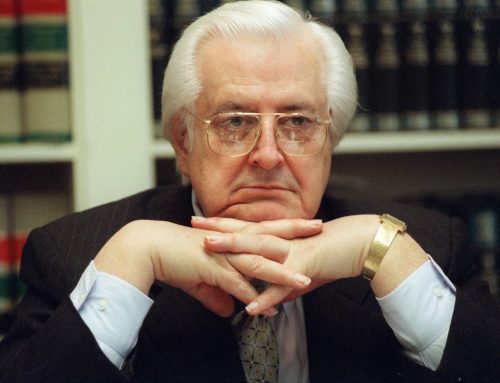
On January 16, 1985, Mr. Justice Gerard LaForest of the New Brunswick Court of Appeal was appointed to the Supreme Court of Canada by Justice Minister John Crosbie. Judge La Forest, 58, replaces Mr. Justice Roland Ritchie who resigned because of ill health.
It had been expected that the successor of Judge Ritchie, who was from Nova Scotia, would come from the Atlantic Provinces. The Campaign Life Newsletter of December expressed fears that Canada’s Human Rights Commissioner Gordon Fairweather, a former PC member of parliament from New Brunswick, might be selected. In the past Fairweather has publicly attacked and ridiculed the Pro-Life movement j (See, for example, “Canadian Council of Christians and Jews,” Interim, February 1984)
Judge La Forest is a bilingual specialist in constitutional law. He graduated from St Francis Xavier University, Antigonish, in 1948, went on to become a Rhodes scholar at Oxford University and took a doctorate in law from Yale University. He has been a Dean of Law (University of New Brunswick), a member of the Law Reform Commission of Canada and a former federal assistant deputy attorney general during the Liberal administration.
The Toronto Star labeled Judge La Forest as a “self described” progressive, despite the Judge’s caution that “it’s very hard to label a judge.” Added La Forest, “I hope to be progressive in terms of developing the law. It’s an ever-evolving thing and I will try very hard to make sure that just because something was followed in 1850, it doesn’t mean we should follow it today.”
It is unknown where Judge La Forest stands in regard to such issues as abortion and the equality sections of the 1981 Charter of Rights. La Forest was advisor to former Justice Minister and Prime Minister Pierre Trudeau between 1967 and 1970. Those years are now famous (or infamous) for widening the grounds for divorce (1968) and legalizing contraceptives and abortion (1969). The Times-Transcript of Moncton, N.B. (Jan. 17), reports that Judge La Forest does not think the Supreme Court is in danger of becoming a copy of the United States Supreme Court. “I don’t think we’re going to see anything like the activist approach in the U.S.” he said.
AH