Life at the Bottom:
The Worldview that Makes the Underclass: 25th Anniversary Edition
Theodore Dalrymple (Bloomsbury, $26.50, 225 pages)
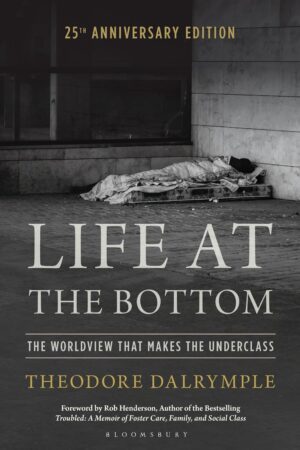 British psychiatrist and author Theodore Dalrymple (real name Anthony Daniels) published Life at the Bottom a quarter century ago and a new edition was warranted, not just because Rob Henderson (Troubled) writes the foreword, but because the baneful worldview Dalrymple identified 25 years ago persists. The collection contains more than 20 previously published essays based on Dalrymple’s time treating patients in English slum hospitals and prisons, and hence he offers anecdotes from his experience. Many of the stories are heart-breaking. What is unusual is that Dalrymple does not find the causes of their plight to be poverty but the choices individuals make, often within the context of accepting the welfare state vision that they were victims of their environment. Henderson says in the foreword that the stories “show the harm of what is now a pervasive, nonjudgmental worldview” in which describing virtues such as hard work as laudable is frowned upon as “reactionary.” Long before Henderson coined the concept of “luxury beliefs,” Dalrymple critiqued the upper-class worldview that condemned the notion that personal decisions might be responsible for the negative consequences in the underclass. The issue is culture, not economics. Dalrymple is opposed to the idea that systemic forces pigeon-hole the underclass into making bad decisions. In his essays, Dalrymple relates the stories of woe following decisions to drink too much, use drugs, gamble, commit crimes, and choose lousy friends and lovers who either harm the companion or lead them to make further bad decisions. The title of one essay sums up Dalrymple’s argument: “Choosing to fail.” Many choose perpetual adolescence, free of responsibility and accountability, but not its consequences.