Campaign Life has spent the last two months canvassing all candidates on the abortion issue. The stand taken by the individual candidate is published in this election edition of The Interim.
We have asked the candidates the following two questions:
Will you work to restore full legal protection to the unborn child?
and
Will you work to stop providing public funds to government and non-government organizations that support or promote abortions?
Only the candidates who have answered “Yes” to these two questions, or those who have already spoken out and voted in Parliament on behalf of the unborn, are considered pro-life.
An increasingly large number of voters see the commitment to the restoration of full legal protection for the unborn as a major qualification for candidates in this election. We do not presume to tell you how to vote; we do urge you to consider your candidate’s view on abortion as the paramount factor in making your voting decision. We desperately need pro-life politicians in the next Parliament so that the killing will be stopped.
Those ridings which have more than one pro-life candidate give the voters the choice of which party to support. However, we must caution you that the NDP has a commitment to support Morgentaler-style clinics across the country. Unless the NDP candidate in your riding is solidly pro-life, do not vote for him or her.
A riding where there is only one pro-life candidate in any of parties leaves the voter with a difficult decision to make. If the candidate is not of the party of your choice, you have to decide seriously if you will be able to cross party lines to uphold your commitment to life.
Campaign Life Saskatchewan has pointed out that casting vote for a pro-life candidate who does not belong to the party you favour means that the nation’s business many not be managed in the manner you desire-but it will managed. Your lifestyle may be altered to some degree – but life will not be threatened.
A candidate who will not make a pro-life commitment may handle the nation’s business as you see fit and promote the kind of lifestyle you desire- but he or she will be definite threat to hundreds of thousands of unborn children.
If, however, you cannot cross party lines – or if you are in a riding where there is no pro-life candidate in any party – what will you do? The only alternative you have is to mark across your ballot “No pro-life candidates” or “No pro-life Liberal (or Conservative, or NDP) candidate.”
This action will be noted by the candidates as the scrutineers check the number of “spoiled” ballots in the individual polls. It will give those candidates who lose, perhaps by a slim margin in some areas, food for thought. It is vital that your ballot is marked so that the candidates and the parties will see the strength of the voters’ pro-life commitment.
There are candidates who refuse to state their views on abortion; either because they hold strongly pro-abortion views, or because they are unaware of the grass-roots support for pro-life, or because they are afraid that a pro-life commitment will lose them votes.
The “Fence-sitters” – the ones who say “I am personally opposed to abortion . . . but” – must be educated. Tell these candidates that this is the major disqualification for a politician and those who will not publicly support the unborn will not receive your support.
On September 4 we have the opportunity to demonstrate the power of the pro-life vote. We urge you all to vote for life.
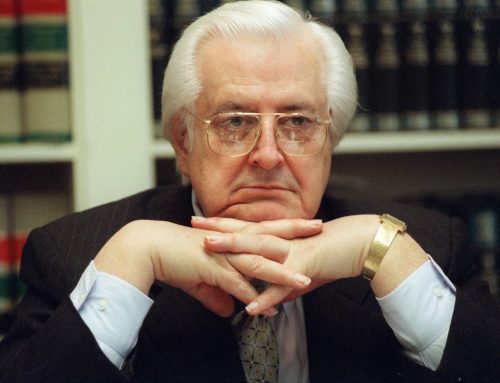
Jim Hughes is President of Campaign Life Canada.