Surviving pre-natal prejudice
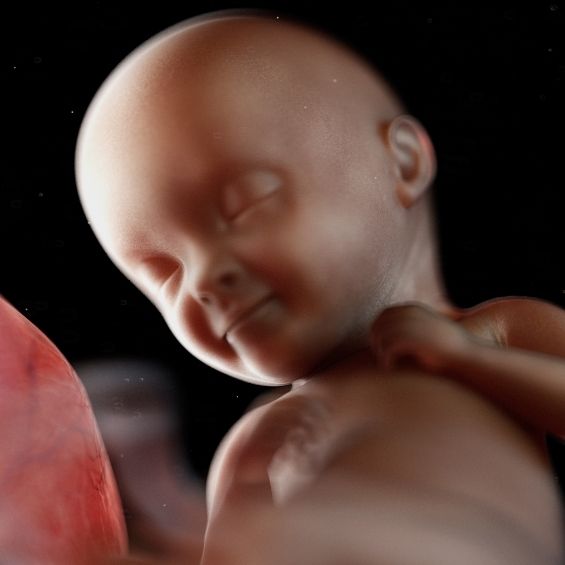
The past ten years have seen huge advancements in the technology of pre-natal testing. Doctors are now able to detect a wide variety of abnormalities during very early stages of pregnancy. Increasingly, parents are opting for abortion instead of taking on the physical, emotional and financial obligations associated with caring for special needs children. No one, not even organizations which defend the disabled, have spoken out to stop this tragedy. These children are the tragic victims of society’s relentless yet futile drive toward perfection. The disabilities they face are not their own but those foisted upon them by an unwelcoming society.
Down and out
People with Down Syndrome are beautiful people. Just ask anyone who knows a Down Syndrome person. They are fun-loving, warm, sociable people, quick to show love and quick to forgive. Unfortunately for them and for the rest of us, Down Syndrome babies are increasingly being targeted for death by abortion and infanticide.
People with Down Syndrome (a condition named after the nineteenth century British doctor who first described it), have an extra twenty-first chromosome; they have a distinctive appearance, and they are intellectually impaired. Because they are also predisposed to certain internal ailments (bowel obstruction, heart defect, and others), they require special medical care. And because of their intellectual impairment, they require extra educational attention and social support.
It is possible to detect Down Syndrome (DS) through amniocentesis, a test in which amniotic fluid is taken from the mother’s womb and analyzed. (Other, less common tests may also reveal DS.) And more and more women are opting for such prenatal testing, often at the suggestion of their doctors. This testing is far from innocuous. As a Harvard Medical School publication bluntly put it: “The main purpose of prenatal testing is to detect birth defects early enough for a pregnancy to be terminated.” (Health Letter, Harvard Medical School, December 1979, Harvard University Press).
These days, women over 35 are routinely informed by their doctors of the “risk” that they will give birth to a DS baby. (The incidence of DS increases with maternal age; for women over 35, it is about one in two hundred.) At the same time these women are often told that children with DS lead difficult and painful lives. One woman, who had just given birth to a DS baby who had a bowel obstruction, was advised by her doctor that “out of the goodness of my heart, I should let her go,” says Laurie Enwright. “I asked if she’d have emotional pain and they said she’d be full of emotional turmoil.” (Toronto Sun) These women were told that DS children require an enormous amount of care, attention and continuing financial support – which she wouldn’t always be around to provide.
Most doctors believe that preborn children who have DS (or some other serious ‘defect’ such as spina bifida) should be aborted. Doctor Malcolm Beck of Charlottetown, who is critical of this trend, states: “The medical literature has betrayed a widespread, usually unstated assumption by the profession that fetal life should be terminated whenever a serious congenital abnormality is strongly suspected.” (Dr. Malcolm Beck, “Eugenic Abortion: An Ethical Critique” in Canadian Medical Association Journal, 1990, 143(3).) Indeed, given that amniocentesis results in the deaths of about one per cent of the preborn tested (through miscarriage or premature labour, some doctors require women to agree beforehand that they will abort if the preborn child is found to be “defective.”
Not only doctors are unfriendly to the DS child. Often the parents are quite willing to countenance the destruction of their unborn child. One study found that the “initial reaction of most of the couples on first hearing that they had an abnormal amniocentesis result was to opt for abortion.” (Journal of Obstetrics and Gynecology, 1989, vol. 10.) As Dr. Beck points out, fear of DS is the largest reason that women want to be tested in the first place: “[physicians] are increasingly pressed by older mothers and their partners to do them [prenatal tests], mostly because of the fear of having a retarded child.”
Perhaps, most surprisingly, two organizations which were founded to promote the interests of people with DS, the Canadian Association for Community Living and the Down Syndrome Society, refuse to take a position on the deliberate abortion of DS children.
Even so, most DS babies survive to be born. (Normally only women over 35 or otherwise considered “high risk” are tested, while about 90 per cent of DS babies are born to “low-risk” women.) However, the DS newborn isn’t safe either. If this baby is born with a bowed obstruction, which is life-threatening but operable, the child could be left to die through the starvation which results from this condition. This is apparently a not uncommon practice at some Canadian hospitals. A survey conducted by Dr. Robert Haslam, of the Hospital for Sick Children in Toronto, revealed that 25 per cent of pediatricians and 33 per cent of surgeons would “not be aggressive” in recommending life-saving surgery for Down Syndrome babies. (Canadian Medical Association Journal, 1990, 143(6).)
The most disturbing argument of all for the destruction of DS babies is that based on economics. The thrust of this argument is that the DS person will result in a net loss of tax dollars since he/she will not – it is assumed – pay income tax and will cost bundles of money to educate and support. As Dr. Patricia Baird, Chair of the Royal Commission on Reproductive Technology and a co-author, wrote in a scholarly “cost-benefit analysis”: “The average lifetime cost to the provincial government of caring for one person with Down Syndrome is approximately $196,000. Avoidance of this cost is referred to as a ‘benefit’…” (Dr. Adele Sadovnick and Dr. Patricia Baird, “A Cost-Benefit Analysis of Prenatal Diagnosis of Down Syndrome and Neural Tube Defects”, B.C. Medical Journal, April, 1982.) What the authors are saying is that for every DS preborn child who is identified and destroyed, society has “benefited” to the tune of almost $200,000.
The other major argument for the killing of these babies is – as has been already noted – the prospect that they will grow into teased and tormented children and then stunted, unhappy adults. Fortunately, this assumption is incorrect. There is no real basis for the widely-held belief that those who are born with certain physical or intellectual limitations are less happy or fulfilled than the rest of us. As was stated in an article on euthanasia, “The assumption that handicapped people enjoy life less than ‘normal’ persons has been shown to be false. A well-documented investigation has shown that there is no difference between handicapped and ‘normal’ persons in their degree of life satisfaction, outlook of what lies immediately ahead, and vulnerability to frustration.” (W. Peacock to D. Shewmon, “Active Voluntary Euthanasia” in Issues in Law & Medicine, 1987.) And in my own conversation with Scott and Kim Pyke (see side article), I certainly learned what folly it is to make assumptions about the lives of persons with DS.
“People mourn at their birth,” says Carl Kazmierski, Professor of Religious Studies at the University of Ottawa, and the father of a young man with Down Syndrome, “not rejoicing that a son or daughter has been born to us, but fearful of the burden and suffering that they will bring. But the burden and suffering come not from the children or any inherent disability they have, but from the disabilities that are placed upon them from the reception that they receive in society… We brought Greg home, and we had a celebration and made him a member of our family, looking forward to his growth in age and grace as did our other children.” (Carl Kazmierski’s speech at the “Save the Planet’s People” conference, Toronto, June 1992.) Greg Kazmierski has grown into a vigorous, happy, active young man who is a high school graduate, a full-time worker and a full member of a healthy family.
It is tragic that in our society many DS babies aren’t as fortunate as Greg. Of course, not all DS persons are capable of finishing high school or working in an unsheltered environment, but all have the potential to learn and to work. They are betrayed by those in whose hands they should be safe. They are targeted for destruction by their doctors and parents. People with DS have the potential to make valuable contribution to our families and to our whole society, if we will only give them a hand up. What kind of society is it which kills those who only ask to be loved?