Arthur Schopenhauer: The Life and Thought of Philosophy’s Greatest Pessimist
David Bather Woods (Chicago, $39, 294 pages)
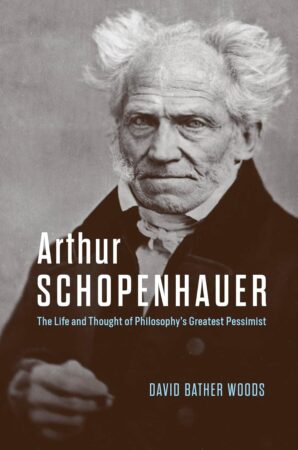 Arthur Schopenhauer has been described as a miserable philosopher who saw human life swing between pain and boredom, suffering that is relieved only partially through aesthetic contemplation and the renunciation of desire: “the world and life can afford us no true satisfaction.” The only antidote to such misery was lonely, silent contemplation of culture and thought. In Arthur Schopenhauer: The Life and Thought of Philosophy’s Greatest Pessimist, David Bather Woods, a philosophy professor at Warwick University, provides a good introductory biography to the man and his philosophy. Schopenhauer was born in Poland in 1788 to a wealthy family and raised in Germany. His father died, probably from suicide, when he was 19, and although he received his doctoral dissertation in philosophy, he was not cut out for teaching. In 1818, five years after graduating, he published The World as Will and Representation. It was not a success. He remained undaunted, writing in 1819, “Posterity will erect a memorial to me.” He became reclusive and published more (ignored) works until 1851, with the publication of Parerga and Paralipomena which represented a popular breakthrough. Exploring his thought, it is easy to see why Schopenhauer never really ‘took’ as a philosopher. His dismal view of life led him to conclude that the best description of his fellow man was as “fellow-sufferers,” an insight that should lead to greater compassion, as Schopenhauer himself wished. But it is difficult to see the suffering of others, much less care for it, if life is, as Schopenhauer described, endlessly irrational and chaotic. There is a disconnect between the desire to help others and the futility of it all in Schopenhauer’s view. Yet the author is wise to counsel against the idea that Schopenhauer’s pessimism is routed in his father’s untimely death, seeing instead the loss “seemed to intensify his own personal drive to live.” In the hands of Woods, Schopenhauer is an example of do what I do, not what I say.